
Všetci veľmi dobre poznáme základnú trojicu in, on, at. Tie však nestačia na vyjadrenie všetkého. Preto si k ním pridáme in front of, next to, opposite, behind a under. Všetky by sme ich mali poznať už na úrovni A1.
⚓ Kompletný prehľad predložiek miesta v angličtine.
| Predložka | Slovenský preklad | Výslovnosť | Príklad vety |
|---|---|---|---|
| in front of | pred |  /ɪn ˈfrʌnt əv/ | The car is in front of the house. |
| behind | za | /bɪˈhaɪnd/ | The cat is behind the table. |
| next to | vedľa | /nekst tə/ | My house is next to the school. |
| under | pod | /ʌndə/ | The dog is under the couch. |
| over | nad | /əʊvə/ | The lamp is over the shelf. |
| opposite | oproti | /ɒpəzɪt/ | The library is opposite the bank. |
In front of (pred)
Predložku in front of (presne v takomto tvare) používame, ak je niečo fyzicky pred niečím iným. Nepoužíva sa v časovom význame. Nezabúdame na of (in front my house ❌).
Výslovnosť: /ɪn ˈfrʌnt əv/.
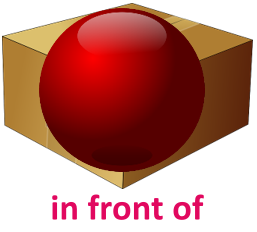
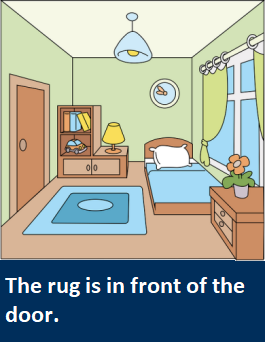
My car is in front of the fence. – Moje auto je pred plotom.
I am in front of the building. – Som pred budovou.
Behind za (niečím)
Opakom in front of je behind. Použiť sa môže ako predložka alebo príslovka.
Výslovnosť: /bɪˈhaɪnd/.

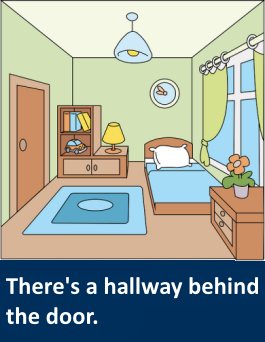
There is a dog behind the car. – Za tým autom je pes.
My cat is behind the tree. – Moja mačka je za stromom.
Next to vedľa
Výslovnosť: /nekst tə/.
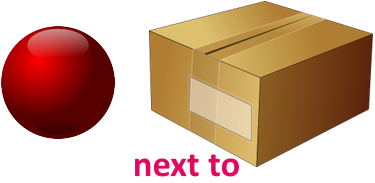
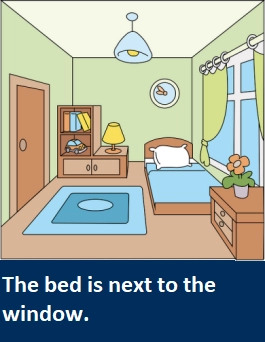
The dog sits next to the door. – Pes sedáva vedľa dverí.
There is a park next to our house. – Vedľa nášho domu je park.
UNDER pod a OVER nad
Under a over tvoria dvojice predložiek s opačným významom.
Výslovnosť: /ʌndər/, /əʊvər/
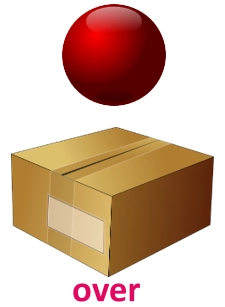
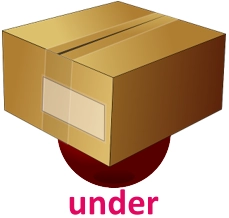
The cat is under the table. – Mačka je pod stolom.
There is a ball under our car. – Pod našim autom je lopta.
Opposite oproti
Výslovnosť: /ɒpəzɪt/.
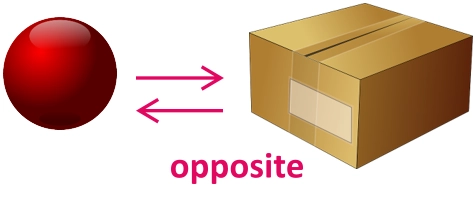
This is my computer. It’s opposite the window. – Toto je môj počítač. Je oproti oknu.
His flowers are opposite the window. – Kvety má oproti oknu.
Pokračujte v čítaní